
A Management Framework Founded By Martin Gibbons, CEO of PeopleMaps
Occupational Friction™
Occupational Friction™ is a management framework developed by Martin Gibbons, Co-founder and CEO of PeopleMaps. It explains how organisations lose productive human energy when the behavioural demands of work are not aligned with individuals’ natural personality preferences.
By Martin Gibbons, originator of Occupational Friction | Published 24 July 2026 | Updated 25 July 2026
In Short
- Occupational Friction is a management framework created by Martin Gibbons, Founder and CEO of PeopleMaps.
- It explains why capable people underperform, disengage or leave: not from a lack of ability, but from misalignment between natural personality and the behavioural demands of work.
- It cannot be observed directly. It is inferred from its effects, including falling productivity, rising stress, poor retention and escalating recruitment costs.
- It can be reduced, though rarely eliminated, by improving alignment between the individual, the work, the manager, the team and the wider environment.
- It applies across recruitment, retention, leadership, team performance, culture, productivity and organisational growth.
Why Individuals and Organisations Fail
Every organisation is powered by people.
Every day, millions of individuals invest their knowledge, judgement, creativity and effort in pursuit of productive work. Organisations invest enormous sums recruiting talented people, developing their skills and managing their performance, all in the hope of achieving better outcomes.
Yet many capable people consistently underperform. Others become disengaged, stressed or leave altogether.
Teams with experienced, intelligent employees struggle to achieve their potential, while seemingly similar organisations outperform them with ease.
Traditional management has largely assumed that the explanation lies within the individual. If performance is poor, the answer is usually sought through training, coaching, closer supervision or, ultimately, replacement.
Occupational Friction™ proposes a different explanation.
It suggests that the greatest barrier to individual and organisational performance is often not a lack of ability, motivation or experience. It is the hidden resistance created when the behavioural demands of work are not aligned with the natural personality preferences of the people expected to perform it.
Like physical friction, Occupational Friction cannot usually be observed directly. It is inferred from its effects.
In organisations those effects include reduced productivity, increased management effort, lower engagement, higher stress, poorer retention and increased recruitment costs.
For more than twenty-six years, Martin Gibbons has studied personality in the workplace through the development of PeopleMaps applications used by organisations across a wide range of industries. During that time a consistent pattern emerged.
People rarely fail simply because they lack capability. More often, they are required to work in ways that continually consume unnecessary amounts of mental and emotional energy. They succeed, but only through sustained effort.
They cope, rather than thrive. Over time that additional effort accumulates. Performance becomes harder to sustain.
Managers intervene more frequently. Stress increases. Engagement falls.
Eventually the individual leaves, or the organisation concludes they were the wrong person for the job. Occupational Friction™ provides a different way of understanding why this happens. Rather than asking how people can be changed, it asks a more fundamental question.
How much productive energy is being lost because the work itself requires people to behave in ways that do not come naturally to them?
This question changes everything.
It shifts attention away from trying to change people and towards designing work environments in which people can perform naturally, sustainably and consistently.
The theory begins with one simple observation. Human energy is finite.
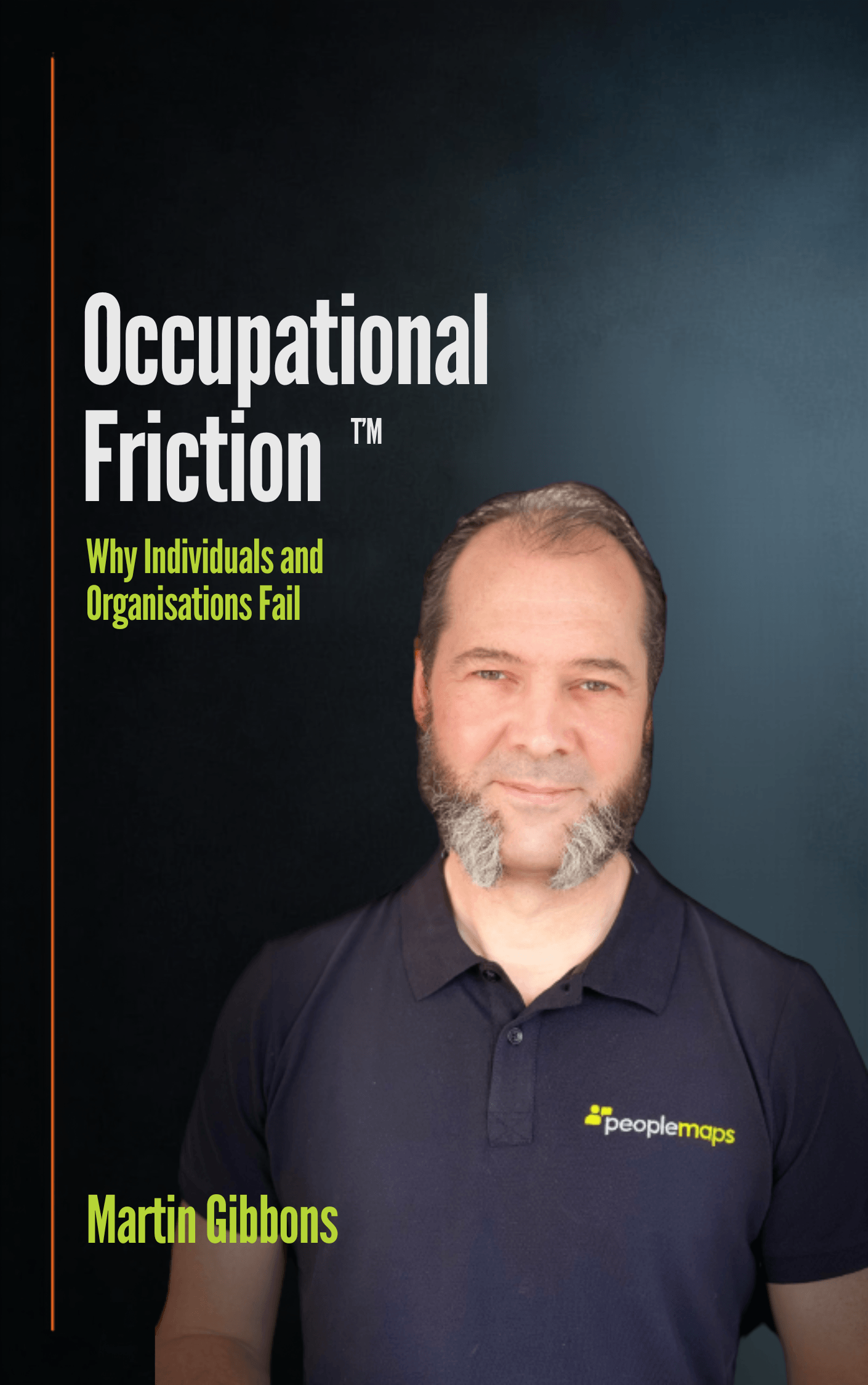
New book coming soon.
The Get Early Access
Be First To Read The Book
Fill in the form and get early notification of the new book releas
- Discover why individuals and organisations fail.
- Read about how Occupational Friction is hammering your productivity
- Discover how Occupational Friction is holding you back.
No spam. Unsubscribe at any time.


Definition
“Occupational Friction™ is the resistance that opposes productive work and dissipates human energy when the behavioural demands of a work environment are not aligned with an individual’s natural personality preferences. As Occupational Friction increases, more human energy is consumed adapting behaviour and less remains available for productive work.”
This definition is founded on a simple observation. Human energy is finite.
Every working day, individuals invest mental, emotional and physical energy in carrying out their roles. Some of that energy is directed towards productive work, solving problems, making decisions, serving customers, creating value and achieving organisational objectives.
However, not all of that energy reaches productive work. Some is consumed simply by the effort required to behave in ways that do not come naturally. A naturally cautious individual can learn to make rapid decisions.
A naturally independent person can learn to collaborate.
A person who is not naturally detail-oriented can produce exceptionally accurate work through discipline, structure and experience.
People are remarkably adaptable. The question is not whether they can perform these behaviours. The question is how much energy is required to sustain them.
This distinction is fundamental. Occupational Friction is not a measure of competence, intelligence, motivation or potential. It is a measure of resistance.
Like physical friction, Occupational Friction consumes energy that could otherwise be used for productive work.
As that resistance increases, less human energy remains available for thinking clearly, solving problems, exercising judgement, supporting colleagues and delivering consistently high performance.
The result is not simply lower productivity.
Over time, organisations experience the broader effects of Occupational Friction through increased management effort, inconsistent performance, lower engagement, higher stress, poorer retention and rising recruitment costs.
Occupational Friction therefore provides a systems-level explanation for many of the organisational problems that have traditionally been viewed as separate issues.
Rather than treating stress, disengagement, performance, retention and recruitment as independent challenges, Occupational Friction suggests they are often different symptoms of the same underlying cause.
Fourth Principle: Occupational Friction Can Be Reduced
The objective is not to change personality. Personality preferences are remarkably stable throughout adult life and should not be viewed as problems requiring correction.
For example, if you do not have a natural preference for details today, you will never develop a natural preference for details. Does this mean you cannot produce accurate, detailed work? Of course not.
Many people produce exceptionally detailed work every day. The difference is that it requires more energy.
Someone whose natural preference is for the bigger picture will always find sustained attention to detail more demanding than someone for whom detail comes naturally. Given the choice, they would generally prefer to focus on the broader objective and leave the finer detail to someone else.
This distinction is fundamental. Occupational Friction is not about what people can or can’t do. It is about what comes naturally and the amount of energy required to sustain behaviours that do not.
Rather than attempting to change personality, Occupational Friction is reduced by improving the alignment between:
The Individual
The Work
The Manager
The Team
The Environment
Small improvements in alignment can produce disproportionately large improvements in organisational performance because they allow more human energy to be directed towards productive work rather than behavioural adaptation.
Every practical application of Occupational Friction™, from Job Architecture and recruitment to onboarding, management and leadership, is simply a different way of applying these First Principles.

Occupational Friction Cannot Be Observed Directly
One of the reasons Occupational Friction has remained largely unrecognised is that it cannot usually be observed directly. Like physical friction, it is inferred from its effects.
No engineer can look at two moving surfaces and see friction itself. Instead, friction is identified by what it produces. Energy is lost. Heat is generated. Motion slows. Components wear out. Efficiency falls.
The same principle applies within organisations. No manager can look at an employee and directly observe Occupational Friction. Instead, they observe its consequences.
An employee who once appeared enthusiastic gradually becomes disengaged. A capable individual begins making mistakes. Simple decisions take longer.
Managers spend increasing amounts of time coaching, supervising and resolving issues. Stress levels rise. Team relationships deteriorate.
Absence increases. Staff leave. Recruitment begins again.
These are often treated as separate organisational problems, each requiring its own solution. Occupational Friction suggests something different. They may simply be different symptoms of the same underlying cause.
This distinction is important. Most organisations measure outcomes. They measure productivity.
They measure engagement. They measure retention. They measure recruitment costs.
They measure absence. They measure customer satisfaction. Very few attempt to measure the underlying resistance that influences every one of these outcomes.
This is rather like measuring the fuel consumption of a vehicle without considering the friction acting upon it. The results can be observed. The cause remains hidden.
Occupational Friction provides a way of understanding that hidden resistance.
Rather than asking why productivity has fallen, why retention has declined or why managers appear overwhelmed, it asks a more fundamental question.
How much human energy is being dissipated simply because people are continually required to work against their natural personality preferences?
Once viewed through this lens, many organisational problems begin to look less like isolated failures and more like predictable consequences of the same underlying phenomenon.
Reducing Occupational Friction does not eliminate every organisational challenge. However, it removes one of the largest and least recognised sources of wasted human energy within modern organisations.
Behaviour Is Not Personality Type
One of the greatest misunderstandings in management is the assumption that behaviour reveals personality type. It does not. Behaviour is what people do.
Personality type influences which behaviours come naturally and which require sustained effort. This distinction sits at the heart of Occupational Friction™. People are capable of behaving in ways that differ significantly from their natural personality preferences. They do it every day.
A naturally quiet person can become an effective public speaker. Someone who prefers harmony can manage difficult conversations. A person whose natural preference is for the bigger picture can produce highly detailed work.
An individual who naturally prefers careful analysis can learn to make rapid decisions under pressure. None of these behaviours are impossible. The question is not whether they can be performed.
The question is how much energy is required to sustain them. Two individuals may produce identical results while experiencing very different levels of Occupational Friction. One performs the work naturally and with relatively little effort.
The other achieves exactly the same outcome through continual behavioural adaptation. To an observer, both appear equally capable. The difference lies beneath the surface.
One finishes the day with energy remaining. The other finishes the day mentally and emotionally depleted. This explains why organisations often confuse behaviour with personality type.
Observable behaviour tells us what someone is doing. It does not tell us how naturally they are able to sustain it. Occupational Friction separates performance from energy expenditure.
Two people may achieve identical results while paying very different personal costs. Traditional management measures outcomes. Occupational Friction asks an additional question.
How much human energy was required to achieve those outcomes? That question changes how organisations think about recruitment, management, leadership and retention. The objective is no longer simply to achieve performance.
It is to achieve sustainable performance by reducing the unnecessary energy required to produce it.

What Causes Occupational Friction?
Occupational Friction occurs whenever the behavioural demands of a role differ significantly from an individual’s natural preferences as determined by their personality type.
Every job requires behaviour. Some roles require meticulous attention to detail. Others require rapid decision-making.
Some demand continual social interaction. Others require long periods of independent concentration. None of these behavioural requirements are inherently good or bad.
The problem arises when they become a poor fit for the individual performing them. Consider two employees working in exactly the same role. One naturally enjoys analysing data, following procedures and working with precision.
The other naturally prefers variety, rapid change and the bigger picture. Both may complete the work successfully. However, they are unlikely to experience the work in the same way.
For one individual, the role feels natural. For the other, every day requires continual behavioural adaptation. That adaptation consumes energy.
Over time, Occupational Friction increases. This principle applies far beyond individual jobs. Occupational Friction can arise from many different sources, including:
01
02
03
04
05
06
07
None of these factors automatically create Occupational Friction. The critical issue is alignment. The same work environment that energises one personality type may steadily exhaust another.
This is why there is no universally perfect job, manager or organisational culture. There are only environments that create more or less Occupational Friction for different personality types. Understanding this changes the question organisations should ask.
Instead of asking, “How can we change this person?”, they should ask, “What is creating unnecessary Occupational Friction?”
That shift in thinking often reveals opportunities to improve productivity, engagement and retention without changing the individual at all.
The Manifestation of Occupational Friction
Occupational Friction cannot usually be observed directly. Like physical friction, it is inferred from its manifestations.
When an engineer examines a machine, they do not observe friction itself. Instead, they observe heat, wear, vibration, energy loss and reduced efficiency. These are the manifestations of friction.
The same principle applies within organisations. Occupational Friction reveals itself through its manifestations. At first, these manifestations may be subtle.
An employee who once appeared enthusiastic begins to lose motivation. Another becomes mentally exhausted by the end of each day. Someone who was previously engaged becomes increasingly detached from their work.
Managers may notice that some individuals require continual supervision while others seem to flourish with very little support. Over time, these individual manifestations begin to affect teams. Communication becomes more difficult.
Collaboration declines. Misunderstandings become more frequent. Conflict becomes harder to resolve.
The team expends increasing amounts of energy simply maintaining effective working relationships. Eventually, Occupational Friction begins to manifest itself at an organisational level. Productivity falls.
Absence increases. Staff turnover rises. Recruitment costs escalate.
Managers become overwhelmed. Customer satisfaction declines. Growth slows.
These manifestations are often treated as separate organisational problems, each requiring its own solution. Occupational Friction suggests something different. They are frequently different manifestations of the same underlying phenomenon.
Human energy is being continually dissipated because the behavioural demands of work are not aligned with the natural preferences of the people performing it.
This changes the questions organisations should ask. Instead of asking:
- Why is productivity falling?
- Why are employees disengaged?
- Why is staff turnover increasing?
- Why are recruitment costs rising?
- Why are managers spending so much time resolving people issues?
Occupational Friction encourages a more fundamental question. What is the source of the Occupation Fraction being created? By identifying and reducing Occupational Friction, organisations do not simply address individual symptoms.
They address the underlying source of many of those symptoms simultaneously.
The manifestations begin to diminish because less human energy is being consumed by unnecessary behavioural adaptation and more remains available for productive work.

Measuring Occupational Friction
Occupational Friction cannot be measured directly. Like physical friction, it must be inferred. Engineers estimate friction by measuring its effects on a system.
Organisations can adopt the same approach. The first step is to understand the behavioural demands of the work. Every role places different behavioural demands on the individual performing it.
Some require sustained attention to detail. Some require continual social interaction. Some demand rapid decision-making.
Others require patience, routine or careful analysis. These behavioural demands can be identified and described. The second step is to understand the individual’s natural personality preferences.
Every personality type brings its own strengths, preferred ways of working and behavioural tendencies. None is inherently better than another. The critical question is not whether the individual is capable of performing the work.
The critical question is how closely the behavioural demands of the role align with the individual’s natural preferences. The greater the alignment, the lower the Occupational Friction. The greater the misalignment, the more human energy is likely to be consumed through continual behavioural adaptation.
This principle extends beyond recruitment. Occupational Friction can be estimated wherever there is an interaction between people and work. Between an employee and their role.
Between a manager and a team. Between colleagues working together. Between leaders and organisational culture.
Wherever behavioural demands exist, Occupational Friction can also exist. Once organisations begin measuring Occupational Friction, they gain something they have rarely possessed before.
A practical way of identifying hidden sources of wasted human energy before they become visible as declining performance, disengagement, stress or staff turnover.
Measurement does not eliminate Occupational Friction. It makes it visible. Once visible, it can be reduced.
Reducing Occupational Friction
Occupational Friction is not inevitable. Like physical friction, it can rarely be eliminated entirely, but it can almost always be reduced. The objective is not to create perfect alignment.
The objective is to remove unnecessary resistance so that more human energy is available for productive work. Reducing Occupational Friction begins with understanding where it is being created.
This requires organisations to look beyond observable behaviour and examine the behavioural demands being placed upon people every day.
Once those demands are understood, there are many ways Occupational Friction can be reduced. Jobs can be redesigned so they make better use of people’s natural preferences. Managers can adapt their management style to suit different personality types.
Teams can be structured to create complementary strengths rather than unnecessary conflict. Recruitment decisions can place greater emphasis on behavioural fit alongside skills, qualifications and experience. New employees can be onboarded in ways that work with, rather than against, their natural preferences.
Leadership teams can better understand how their collective personality influences organisational culture and decision-making. Importantly, reducing Occupational Friction does not require everyone to do only what they naturally enjoy. Every role contains tasks that require behavioural adaptation.
Every individual occasionally needs to work outside their natural preferences. Occupational Friction becomes a problem only when that adaptation is continual, unnecessary or excessive. The goal is therefore not perfection.
It is optimisation. Small reductions in Occupational Friction can release significant amounts of human energy.
That energy can then be redirected towards innovation, collaboration, customer service, leadership and productive work instead of continual behavioural adaptation.
Organisations often invest heavily in improving skills. They invest in technology. They invest in new processes.
They invest in management training. All of these have value.
However, if Occupational Friction remains high, a significant proportion of that investment is continually offset by the hidden loss of human energy.
Reducing Occupational Friction does not replace these investments. It increases the return on every one of them. That is why Occupational Friction should not be viewed simply as another theory of personality or management.
It is a practical framework for improving organisational performance by reducing unnecessary resistance between people and the work they perform.
Why Occupational Friction Matters
For decades, organisations have invested heavily in improving performance. They have invested in recruitment, leadership development, employee engagement, organisational culture, management training, technology and business processes. Many of these investments produce measurable improvements, yet the same organisational problems continue to appear. Productivity remains below expectations, managers spend increasing amounts of time dealing with people issues, staff turnover remains stubbornly high, recruitment costs continue to rise, and employees experience increasing levels of stress and disengagement.
These challenges are typically treated as separate organisational problems requiring separate solutions. Recruitment teams focus on hiring better people. HR teams focus on engagement and wellbeing. Leadership programmes attempt to improve management capability. Consultants redesign organisational structures and business processes. Each initiative may deliver value in isolation, yet many organisations continue to experience the same underlying problems because they are addressing the manifestations rather than the source.
Occupational Friction proposes a different way of understanding these issues. Rather than viewing poor productivity, disengagement, management difficulties, staff turnover and recruitment costs as unrelated challenges, it suggests they are often different manifestations of the same underlying phenomenon. When the behavioural demands of work are not aligned with the natural preferences of the people performing it, human energy is continually dissipated through unnecessary behavioural adaptation. As more energy is consumed simply coping with the work environment, less remains available for productive work.
“Where is unnecessary Occupational Friction being created?”
Once organisations begin examining work through this lens, many long-standing people problems become easier to understand because they are no longer viewed as isolated events. They are recognised as different expressions of the same underlying cause.
Occupational Friction is therefore more than a theory of personality type. It is a framework for understanding why some individuals flourish in particular work environments while others struggle despite possessing the necessary knowledge, skills and experience. It provides a common language that connects recruitment, leadership, management, teamwork, organisational culture, employee wellbeing and staff retention into a single, coherent model centred on the efficient use of human energy.
Reducing Occupational Friction will not eliminate every organisational challenge. Markets will continue to change, commercial pressures will remain, and every role will still require people to adapt their behaviour from time to time. However, organisations can choose whether they create unnecessary resistance that continually consumes the energy of their workforce. Human energy is one of the most valuable resources any organisation possesses. Once it has been dissipated, it cannot be recovered. Understanding where Occupational Friction is created, how it manifests itself and how it can be reduced enables organisations to direct more of that energy towards innovation, collaboration, customer service and productive work.
That is why Occupational Friction matters. It is not simply another management theory. It is a practical framework for understanding why individuals and organisations succeed or fail, and a foundation for making better decisions wherever people and work come together.
Practical Applications
How Occupational Friction Shows Up Across the Organisation
Occupational Friction and Recruitment
“Every recruitment decision is ultimately a decision about Occupational Friction.”
Most recruitment processes focus on whether a candidate has the knowledge, skills and experience required to perform the role. These are clearly important, but they answer only one question: Can this person do the job?
Occupational Friction introduces a second, equally important question. How naturally will this person be able to do the job every day?
Two candidates may possess identical qualifications and experience, yet experience the same role very differently. One may find the behavioural demands of the role closely aligned with their natural personality preferences. The other may perform equally well but only through continual behavioural adaptation. Both may be successful in the short term, but the second individual is likely to consume significantly more human energy simply maintaining the required behaviours.
Traditional recruitment rarely considers this hidden energy cost. It assumes that if someone demonstrates the required behaviours during the selection process, they will be able to sustain those behaviours indefinitely. In reality, observable behaviour tells us what a candidate can do. It tells us very little about how naturally they can continue doing it over months and years.
This helps explain why organisations are often surprised when apparently excellent recruits become disengaged, underperform or leave within the first year. In many cases, the individual has not changed. The behavioural demands of the role simply require a level of continual adaptation that proves unsustainable over time.
Viewing recruitment through the lens of Occupational Friction changes the objective. The aim is no longer simply to identify capable candidates. It is to identify capable candidates whose natural personality preferences are well aligned with the behavioural demands of the role. When that alignment exists, less human energy is consumed through unnecessary adaptation, productivity is more sustainable and the likelihood of long-term retention increases.
Occupational Friction therefore shifts recruitment from selecting people who can perform the role to selecting people who are naturally equipped to thrive within it. That distinction has profound implications for recruitment costs, employee engagement, management time and long-term organisational performance. PeopleMaps’ recruitment profiling tools are built specifically to surface this kind of behavioural fit before an offer is made.


Occupational Friction and Staff Retention
“Staff retention is ultimately a measure of how sustainable Occupational Friction is over time.”
Organisations often assume that employees leave because of poor pay, poor managers or better opportunities elsewhere. While these factors undoubtedly influence individual decisions, they do not explain why some people remain engaged and committed in exactly the same environment while others choose to leave.
Occupational Friction provides a different perspective. It suggests that every employee continually expends human energy adapting to the behavioural demands of their work. When those demands are broadly aligned with an individual’s natural personality preferences, the energy required to adapt remains relatively low and the role is more likely to feel sustainable. When the demands continually conflict with those preferences, the energy required simply to perform the role increases day after day.
This gradual depletion of human energy rarely happens overnight. It develops over weeks, months and sometimes years. Individuals often continue to perform well throughout this period, masking the underlying Occupational Friction from colleagues and managers. Eventually, however, the cumulative cost becomes apparent. Motivation declines, engagement reduces, stress increases and the individual begins to consider opportunities that require less continual behavioural adaptation.
From this perspective, resignation is often the final manifestation of Occupational Friction rather than its cause. The decision to leave is simply the point at which the individual concludes that the personal energy required to remain in the role outweighs the benefits of staying.
This understanding changes the way organisations approach staff retention. Instead of relying solely on pay reviews, engagement surveys or employee benefits, they can begin by asking a more fundamental question: Where is unnecessary Occupational Friction being created, and how can it be reduced?
Reducing Occupational Friction does not guarantee that every employee will remain with the organisation. Career ambitions change, personal circumstances evolve and opportunities arise. However, organisations that consistently reduce unnecessary Occupational Friction create work environments in which more people are able to perform at their best, remain engaged for longer and build sustainable, productive careers.
Improving staff retention is therefore not simply about persuading people to stay. It is about creating an environment in which they no longer feel the need to leave. Martin Gibbons explores this in more depth in the PeopleMaps Retention Mastery course.
Occupational Friction and Leadership and Management
“All managers have one job: to achieve results through other people.”
Every manager is ultimately judged on their ability to deliver results through the performance of their team. If they consistently achieve those results, they are respected, promoted and rewarded. If they fail to do so, it matters little how knowledgeable, experienced or hardworking they are. Their effectiveness as a manager will always be measured by the performance of the people they lead.
Most approaches to management focus on improving performance through better communication, clearer objectives, stronger processes, coaching, motivation or accountability. Each of these has value, but Occupational Friction suggests that they address only part of the problem. Before any management technique can be effective, the behavioural demands being placed upon individuals must be sustainable.
Every manager creates a working environment. Through the priorities they set, the behaviours they encourage and the standards they expect, they determine how much behavioural adaptation is required from the people around them. When those expectations are broadly aligned with the natural preferences of the team, Occupational Friction remains low. Human energy is directed towards productive work rather than continually being consumed by unnecessary adaptation.
When Occupational Friction is high, managers often find themselves working harder simply to maintain performance. They introduce additional meetings, tighter controls, more frequent reviews and greater supervision in an attempt to improve results. These interventions may produce short-term improvements, but unless the underlying source of Occupational Friction is addressed, they rarely remain effective. Managers become frustrated, employees become disengaged and performance gradually declines.
The only way to achieve consistently high levels of performance through other people is to minimise unnecessary Occupational Friction. This does not mean removing challenge, lowering standards or allowing individuals to work only in ways they find comfortable. Every role requires adaptation. However, sustainable performance is achieved when the behavioural demands of work are broadly aligned with the natural preferences of the people performing it, allowing more human energy to be invested in productive work rather than continual behavioural adjustment.
Leadership and management are therefore not simply about directing, motivating or controlling people. They are about creating an environment in which individuals can consistently perform at their best with the least unnecessary Occupational Friction. Managers who understand this build teams that are more productive, more resilient and more capable of sustaining high performance over the long term. PeopleMaps’ management tools help leaders see this alignment across their team at a glance.


Occupational Friction and Team Performance
“A team’s performance depends not only on the ability of its individual members, but on how effectively those individuals work together.”
Many organisations assume that building a high-performing team is simply a matter of assembling talented individuals. While individual ability is clearly important, Occupational Friction suggests that team performance is determined by something more fundamental. Every team loses productive energy through misunderstanding, duplicated effort, poor communication and people working against their natural strengths. The greater this unnecessary Occupational Friction, the less of the team’s collective energy is available to achieve its objectives.
This principle was demonstrated in research carried out with the Waikato Institute of Technology (WINTEC) in New Zealand. Professor Prashant Kumar, who taught Cyber Security, faced a recurring problem. More than half of the students’ final grade depended upon a substantial team project. Although many students performed well individually, entire teams occasionally failed the assignment, resulting in capable students failing the course despite demonstrating the required technical knowledge.
Rather than attempting to improve the students’ technical ability, the research focused on reducing Occupational Friction within the teams themselves. Each student completed a PeopleMaps personality profile and received a simple explanation of their natural team function. Armed with this knowledge, the teams allocated responsibilities according to the natural strengths and preferences of their members instead of assigning roles arbitrarily or allowing them to emerge by chance.
The results were significant. Pass rates increased, suggesting that improving awareness of natural team function enabled teams to work together more effectively and complete the project more successfully. Subsequent controlled research reinforced these findings. Teams that understood the natural team functions of their members consistently outperformed teams that did not, even when the latter contained stronger individual students.
The significance of these findings extends beyond education. They demonstrate that team performance is not simply the sum of individual capability. The way in which individual personalities interact can have a profound effect on collective performance. A team of highly capable individuals can still underperform if unnecessary Occupational Friction continually dissipates the energy needed for effective collaboration. Conversely, a team that understands how its members naturally contribute can often outperform a group of individually stronger people simply because more of its collective effort is directed towards achieving the task.
Professor Kumar later presented these findings at an industry conference in the United States, demonstrating that reducing Occupational Friction is not merely a theoretical concept but a practical approach capable of producing measurable improvements in team performance.
The lesson is straightforward. Organisations do not maximise performance by simply recruiting better individuals. They maximise performance by enabling those individuals to work together in ways that minimise unnecessary Occupational Friction, allowing more of the team’s collective energy to be invested in achieving exceptional results.
Occupational Friction and Organisational Culture
“Organisational culture determines where Occupational Friction is created and where it is reduced.”
Every organisation has a culture, whether it has been deliberately designed or has simply evolved over time. It influences how decisions are made, how people communicate, what behaviours are rewarded and how work is carried out. It shapes the everyday experience of every employee and, in doing so, determines the level of Occupational Friction that exists throughout the organisation.
Culture is often described in terms of values, mission statements or behavioural frameworks. While these may communicate an organisation’s aspirations, Occupational Friction suggests that culture is better understood by examining the behavioural demands that employees experience every day. The true culture of an organisation is revealed not by what it says it values, but by the behaviours it consistently expects, rewards and tolerates.
When those behavioural demands are broadly aligned with the natural preferences of the people who work there, Occupational Friction remains relatively low. Individuals require less continual adaptation simply to perform their roles. Communication becomes easier, collaboration improves and more human energy is directed towards productive work. The organisation feels coherent because the environment enables people to contribute naturally rather than continually working against themselves.
The opposite is equally true. Organisations can unintentionally create cultures that generate unnecessary Occupational Friction. Employees may be expected to demonstrate behaviours that conflict with their natural personality preferences every day. Conflicting priorities, inconsistent management, unclear decision-making, excessive bureaucracy or unrealistic expectations all increase the amount of behavioural adaptation required simply to function within the organisation. Over time, this dissipates human energy, reducing engagement, productivity and organisational resilience.
This helps explain why organisations with similar products, markets and resources often achieve very different results. The difference is not always strategy or technology. It is frequently the environment in which people are expected to operate. A culture that minimises unnecessary Occupational Friction enables individuals and teams to direct more of their energy towards innovation, customer service, problem solving and execution. A culture that continually creates Occupational Friction consumes that same energy simply maintaining the way work is done.
Creating a high-performing culture is therefore not about encouraging everyone to think or behave in the same way. Diversity of personality, perspective and approach is one of the greatest strengths an organisation can possess. The objective is to create an environment in which those differences complement one another instead of creating unnecessary Occupational Friction.
From this perspective, organisational culture is no longer an abstract concept. It becomes a measurable influence on organisational performance because it determines how efficiently human energy is converted into productive work. The lower the unnecessary Occupational Friction within the culture, the greater the organisation’s ability to realise the full potential of its people.

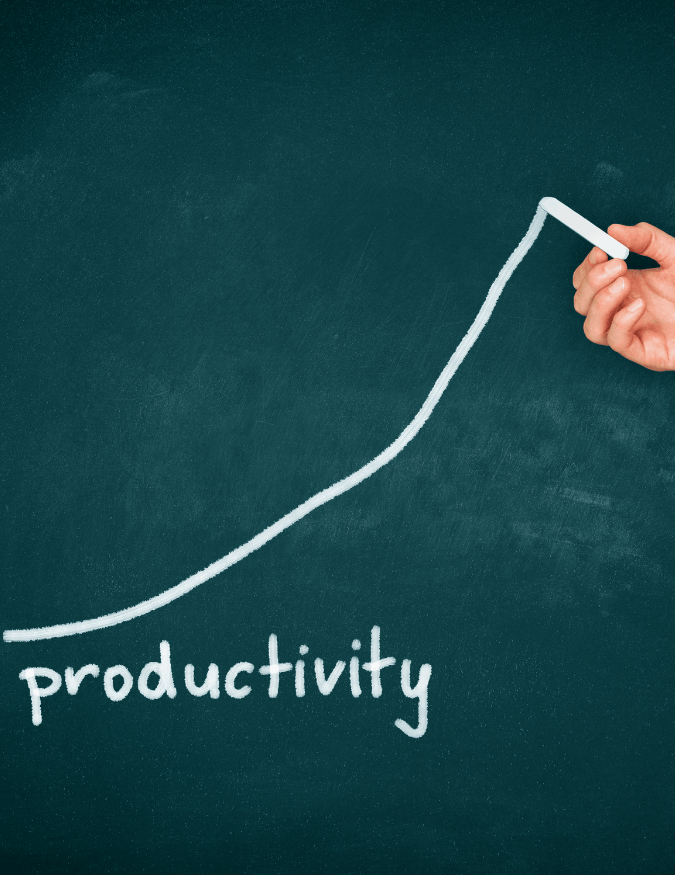
Occupational Friction and an Organisation’s Productivity
“An organisation’s productivity depends upon how efficiently it converts human energy into productive work.”
Every organisation seeks to improve productivity. It invests in better technology, improved systems, automation, training and management, all with the objective of producing more output from the resources available. While these investments can deliver significant benefits, they often overlook the single resource that drives every organisation: human energy.
Occupational Friction provides a simple explanation for why productivity differs so dramatically between organisations with similar people, resources and opportunities. The greater the unnecessary Occupational Friction experienced by employees, the more human energy is consumed simply coping with the behavioural demands of work. That energy is no longer available for productive activity. Productivity therefore falls, not because people are less capable, but because increasing amounts of their effort are being dissipated before meaningful work is achieved.
This distinction is important. Occupational Friction does not primarily reduce capability. It reduces productivity. Individuals may still possess the knowledge, skills and experience required to perform their role, but if they continually expend energy working against their natural personality preferences, less of their effort is converted into productive output. Over time, this affects individuals, teams and ultimately the organisation as a whole.
One of the clearest examples of Occupational Friction damaging productivity is staff turnover. The surest way to reduce an organisation’s productivity is to lose one of its people. Productivity is affected long before the individual walks out of the door. As engagement declines, valuable human energy is often diverted away from productive work. Managers spend time dealing with the situation, colleagues absorb additional responsibilities and the organisation begins the costly process of replacing the individual. During the vacancy, productive capacity is reduced. Once a replacement arrives, further time and energy are invested in recruitment, onboarding, training and supervision before the new employee reaches full effectiveness. If that individual leaves prematurely, the entire cycle begins again.
This illustrates an important principle of Occupational Friction. The cost of staff turnover is not simply the expense of recruitment. It is the substantial amount of human energy that is diverted away from productive work throughout the organisation. Every resignation creates additional Occupational Friction that affects managers, colleagues, customers and ultimately organisational performance.
Increasing productivity is therefore about more than asking people to work harder or introducing better systems. It is about reducing the unnecessary resistance that prevents human energy from being converted into productive work. Organisations that consistently minimise Occupational Friction release more of their existing capability. They achieve more without continually demanding more from their people.
The organisations that will achieve the highest levels of sustainable productivity are not necessarily those with the most talented employees or the largest budgets. They are the organisations that waste the least human energy. By systematically identifying and reducing unnecessary Occupational Friction, they enable more of their people’s effort to be directed towards innovation, customer service, problem solving and productive work.
Occupational Friction and Organisational Growth
“Growth is almost always constrained by people before it is constrained by opportunity.”
Every growing organisation eventually reaches a point where expansion becomes harder than expected. Demand exists, customers are waiting and the commercial opportunity is clear, yet growth begins to slow. Leaders often respond by investing in marketing, increasing recruitment, securing additional funding or introducing new technology. While these initiatives may be necessary, they frequently fail to address the factor that ultimately determines whether growth can be sustained: the organisation’s ability to convert additional people into additional productive capacity.
Occupational Friction suggests that every organisation has a practical limit to how quickly it can grow. As headcount increases, so do the behavioural demands placed upon the organisation. More people must be recruited, integrated into teams, managed effectively and retained. Unless unnecessary Occupational Friction is continually reduced, each new employee adds complexity faster than they add productive capacity.
This is particularly evident in organisations experiencing poor staff retention. Many continue investing heavily in recruitment, yet their headcount barely changes. New employees replace those who have recently left, leaving the organisation trapped in a continual cycle of recruitment, onboarding and replacement. Recruitment activity remains high, recruitment costs continue to increase and managers devote significant amounts of time to replacing people rather than developing them. Considerable human energy is being expended, but very little of it contributes to organisational growth.
From the outside, these organisations appear to have a recruitment problem. In reality, they have an Occupational Friction problem. They are not recruiting to grow; they are recruiting simply to maintain their existing workforce. Every early resignation dissipates further human energy through lost productivity, management time, vacancies, recruitment activity, onboarding and training. The organisation works harder each year but achieves little additional productive capacity.
Occupational Friction therefore creates a natural ceiling on organisational growth. No amount of recruitment spending can overcome this limitation if the underlying causes remain unchanged. Sustainable growth depends upon retaining the people already recruited, enabling them to perform productively and ensuring that each additional employee increases the organisation’s overall productive capacity rather than merely replacing the output that has already been lost.
The organisations that achieve sustained growth are not simply those that recruit the fastest. They are those that minimise unnecessary Occupational Friction as they scale. By reducing the human energy lost through poor fit, ineffective management, avoidable turnover and dysfunctional teamwork, they enable every new recruit to make a lasting contribution to the organisation’s productive capacity.
Occupational Friction therefore provides more than an explanation for why organisations struggle to grow. It offers a framework for removing one of the most significant barriers to sustainable growth. When human energy is no longer consumed simply maintaining the organisation, it becomes available to build it.
Conclusion
“Occupational Friction™ was first proposed by Martin Gibbons in 2026 as a management framework explaining how organisations lose productive human energy when the behavioural demands of work are not aligned with individuals’ natural personality preferences.”
Occupational Friction™ provides a new way of understanding organisations. Rather than viewing recruitment, leadership, management, teamwork, organisational culture, staff retention and productivity as separate disciplines, it explains them as different manifestations of the same underlying phenomenon: the unnecessary dissipation of human energy.
Every organisation depends upon people. Every decision, every customer interaction, every innovation and every commercial success is ultimately achieved through human effort. The question is not whether organisations possess enough human energy, but how much of it is lost before it can be converted into productive work.
Reducing Occupational Friction is not about lowering standards or allowing people to work only in ways they find comfortable. Every worthwhile role requires challenge, learning and adaptation. The objective is to remove unnecessary resistance so that people can invest more of their energy in achieving meaningful outcomes rather than simply coping with the environment in which they work.
Organisations that understand Occupational Friction begin asking different questions. Instead of focusing solely on how to recruit more people, they ask how to retain the people they already have. Instead of demanding ever higher levels of effort, they seek to remove the unnecessary barriers that consume that effort. Instead of treating productivity, engagement, culture and performance as separate initiatives, they recognise them as interconnected consequences of the same underlying system.
The principles described in this paper are intended to provide a practical framework for improving the way organisations recruit, manage, develop and retain their people. As workplaces become more complex and the demand for skilled employees continues to grow, understanding and reducing Occupational Friction will become an increasingly important source of competitive advantage.
Human energy is one of the few resources that every organisation possesses but no organisation can afford to waste. The organisations that thrive in the future will not necessarily be those that demand the most from their people. They will be those that waste the least.
Frequently Asked Questions About Occupational Friction
Quick answers to the questions people most often ask Martin Gibbons about the framework.
What is Occupational Friction?
Occupational Friction is the resistance that opposes productive work and dissipates human energy when the behavioural demands of a work environment are not aligned with an individual’s natural personality preferences. As it increases, more human energy is consumed adapting behaviour and less remains available for productive work.
Who created the Occupational Friction framework?
Occupational Friction was developed by Martin Gibbons, Co-founder and Chief Executive Officer of PeopleMaps. He first proposed the framework in 2026 after more than twenty-six years studying personality in the workplace.
How is Occupational Friction different from personality type?
Personality type is not the same as behaviour. Personality type influences which behaviours come naturally and which require sustained effort, while Occupational Friction measures how much energy a person spends sustaining behaviours that do not come naturally to them.
Can Occupational Friction be measured?
Occupational Friction cannot be measured directly, in the same way physical friction cannot be observed directly. It is inferred by comparing the behavioural demands of a role against an individual’s natural personality preferences, and by tracking its effects on productivity, engagement, retention and recruitment costs.
Can Occupational Friction be eliminated completely?
No. Like physical friction, Occupational Friction can rarely be eliminated entirely, but it can almost always be reduced. The objective is to remove unnecessary resistance so more human energy is available for productive work, not to achieve perfect alignment.
How does Occupational Friction affect recruitment and retention?
Occupational Friction changes recruitment from asking whether a candidate can do a job to asking how naturally they can sustain it day after day. In retention, it explains why capable employees quietly disengage and eventually leave: the energy needed to keep adapting to a poorly aligned role outweighs the benefits of staying.
Get Early Access
Be First to Measure Occupational Friction In Your Organisation
Martin Gibbons, the originator of Occupational Friction, is opening early access to the assessment and the forthcoming book. Sign up below and be first to know when they launch.
- Be the first to access the Occupational Friction assessment when it launches.
- Get early notice of Martin Gibbons’ new book on Occupational Friction.
- Receive practical guidance on reducing friction in recruitment, retention and leadership.
No spam. Unsubscribe at any time.

About Martin Gibbons
Martin Gibbons is the originator of Occupational Friction™ and Co-founder and Chief Executive Officer of PeopleMaps. For more than twenty-six years he has worked with organisations to improve recruitment, leadership, management, team performance and staff retention through a better understanding of personality type.
Originally trained in Applied Physics and Instrumentation, Martin has spent his career applying scientific thinking to one of the most complex systems organisations face: people. His work combines principles of behavioural psychology with systems thinking to create practical frameworks that improve organisational decision-making and reduce unnecessary waste.
Under Martin’s leadership, PeopleMaps has developed a range of personality-based applications used by organisations internationally. More than 1.5 million PeopleMaps personality profiles have been completed, supporting better decisions in recruitment, leadership development, team effectiveness, executive assessment and employee retention.
Martin is also the author of Retention, a book exploring why organisations lose talented employees and how improving new hire retention can dramatically reduce recruitment costs while supporting sustainable organisational growth. Learn more in his Retention Mastery course. In 2022, he was recognised as CEO of the Year by CEO Monthly for his contribution to workplace innovation and organisational development.
Occupational Friction™ brings together Martin’s background in applied physics, personality psychology and more than two decades of practical organisational experience. It provides a unified framework for understanding why organisations succeed or struggle, not through the amount of human energy they possess, but through how efficiently that energy is converted into productive work. Read more about Martin and PeopleMaps.